Pet Hair at Home
How to Remove Pet Hair from a Fabric Couch
A fabric-first routine for loose surface hair, with clear tool choices and a separate plan for seams and corners.
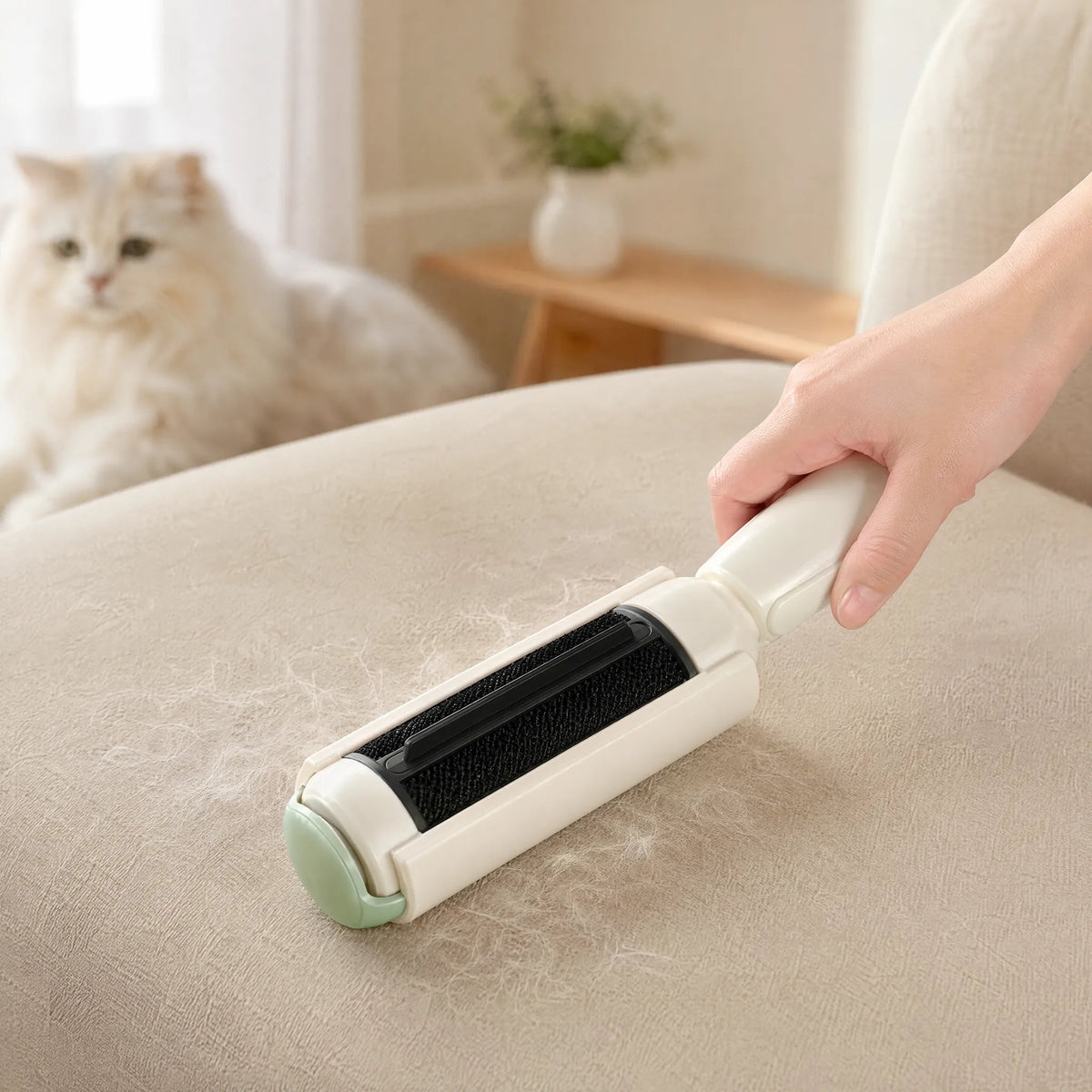
A fabric couch needs a surface check before it needs another pass with a roller. Start with the upholstery maker’s care instructions, try your tool on a hidden area, and work gently over dry, compatible fabric. Use a separate approach for seams and corners instead of forcing a wide roller into them.
1. Check the couch before choosing a tool
Look for the care label or the manufacturer’s care guide. A washable cover does not automatically mean every brush, scraper or roller is suitable for it. If the fabric has loose loops, delicate decoration, an unusual finish or visible damage, ask the manufacturer which dry-cleaning tools are appropriate.
Try a few light strokes on a hidden patch. Look at the surface from more than one angle. If you notice catching, pulled threads, a change in texture or color transfer, stop. Do not keep increasing pressure to make an unsuitable tool work.
Follow the couch maker’s care instructions.
Try a small, hidden patch with light pressure.
Continue only if the fabric remains unchanged.
2. Match the tool to the part you are cleaning
| Area | Starting point | Check first |
|---|---|---|
| Broad cushion faces | A collection-chamber roller | The fabric stays flat and does not catch during a patch test. |
| A small spot or curved fabric section | A fabric hair-removal mitt | The mitt is for furniture fabric, not brushing your pet. |
| Seams and narrow gaps | A compatible upholstery or crevice attachment, if your vacuum and couch instructions allow it | Do not force a roller across piping, fasteners or an opening it cannot reach. |
Need to compare tools across the home? Our Find Your Tool guide separates surface-cleaning tools from laundry and grooming tools.
3. Work across the dry cushion in sections
With the Fur & Fresh collection-chamber roller, move back and forth over a compatible dry fabric surface. Work in overlapping passes so you can see where you have been. Keep the pressure light and check the material as you move to the next area.
Move from the broad cushion face to the next flat section. Treat the seams and gaps separately. If you use a fabric mitt for a small area, follow its short, one-way stroke instructions. The two tools have different motions; using more force is not a substitute for choosing the right tool.
4. Empty the tool before storing it
Open the roller’s collection chamber, remove the collected debris, and close it before using the tool again. Put loose hair in the trash. Follow the tool’s care instructions rather than assuming a collection-chamber roller can be rinsed like a washable lint roller.

A simple repeatable routine is to check the fabric, clean one area at a time, and empty the tool afterward. Results will depend on the upholstery, the hair and how the tool is used.
When the remaining hair will not lift
Pause if the fabric begins to catch or if extra passes are changing its appearance. For hair deeply worked into a weave, or upholstery with special care requirements, ask the furniture maker or an upholstery-cleaning professional for an appropriate method. Avoid escalating from a gentle roller to a scraping edge without confirming that the fabric can tolerate it.
Common questions
Can I use the roller directly on my dog or cat?
No. This collection-chamber roller and the fabric mitt are surface-cleaning tools. Choose a pet-grooming tool for your pet’s coat.
Is this the same as a washable lint roller?
No. This roller collects hair in a chamber. Our washable lint roller has a pickup surface that is rinsed and allowed to dry. Follow the instructions for the tool you own.
Does this routine cover leather or suede?
No. This guide concerns compatible fabric upholstery. Follow the furniture maker’s instructions for leather, suede and other specialist finishes.
Prepared by Fur & Fresh Team using the current instructions for our collection-chamber roller and fabric mitt. Product illustrations show the tools and their intended context; they are not a comparative performance test. Your furniture’s care instructions take priority.